
Two cardboard boxes can look alike but serve different purposes. One box is built to handle heavy loads while the other is lighter duty. Judging by color or feel won’t tell you what you need to know. Many corrugated boxes have a small stamp on the bottom.
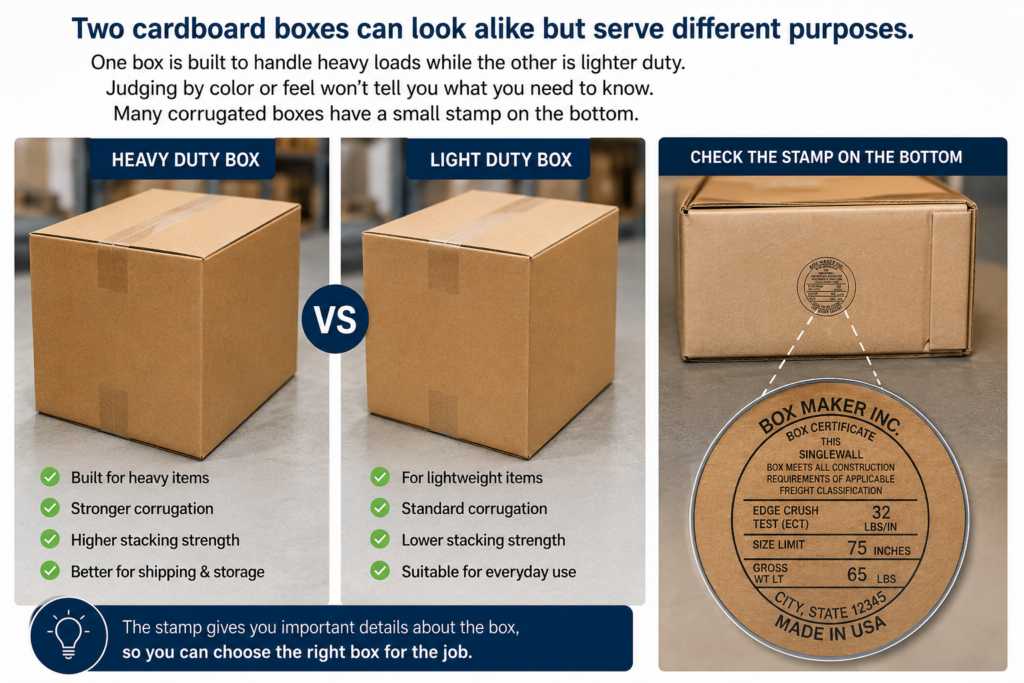
Learning to read that stamp can make ordering much less confusing. This stamp is called maker’s certificate. It might name the company that made the carton and show if the board has one wall or two. It can also list size limits, weight limits and test scores. Not all boxes use the same stamp so ask sellers for clear details if something is unclear.
Wall type refers to how many wavy layers lie between flat sheets. Single wall cartons have just one middle wavy layer while double wall cartons have two. Adding more layers gives more support but wall count alone is not everything. Board grade, box shape, weather conditions, handling, and how items are packed also matter a lot.
Some stamps show Edge Crush Test scores. This test measures how much force the edge of the board can take before it gives in. Scores from this test can be useful when stacking cartons. But a poor load can still bend or press walls anyway.
Another stamp might show burst score results. This test measures how much pressure is needed to break through the box. This test gives different information from ECT. One test looks at edge strength and the other puncture force.
Useful scores depend on what the box will encounter on its journey. Printed weight limits refer to filled packages and not just the product itself. When adding up the total weight, include the item itself, padding, inner packages, tape and papers as well. Size limits have a specific meaning so don’t guess how they were determined. Sellers or carriers can explain how to use those numbers correctly.
Before buying bundles, write down weight of load and how boxes will be handled. Compare that against stamp and seller notes too. Then pack a sample and test it under actual working conditions. Trials can show bulging seams or weak seams before many orders are sitting on the floor.
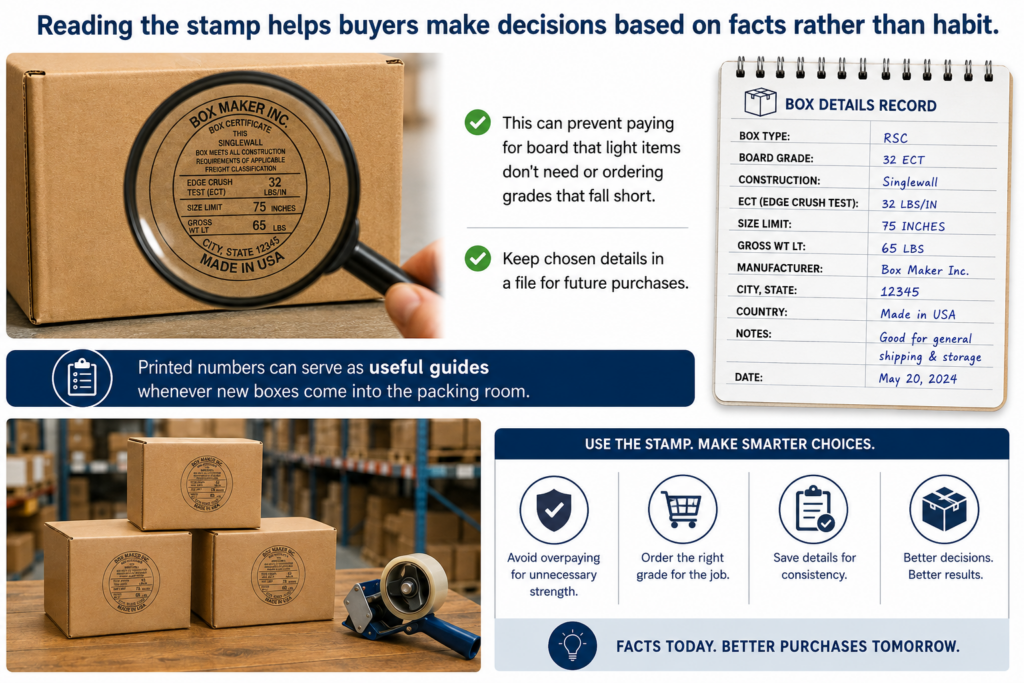
Reading the stamp helps buyers make decisions based on facts rather than habit. This can prevent paying for board that light items don’t need or ordering grades that fall short. Keep chosen details in a file for future purchases. Printed numbers can serve as useful guides whenever new boxes come into the packing room.
