
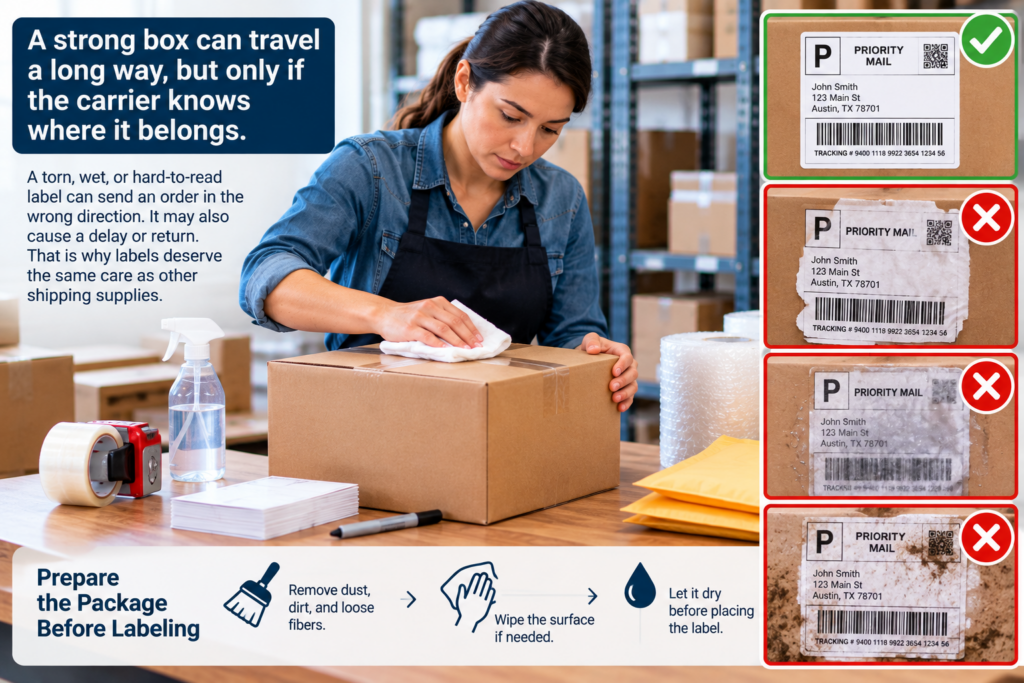
A strong box can travel a long way, but only if the carrier knows where it belongs. A torn, wet, or hard-to-read label can send an order in the wrong direction. It may also cause a delay or return. That is why labels deserve the same care as other shipping supplies.
Begin with a clean package. Dust, dirt, and loose fibers can keep a label from sticking. Wipe the surface if needed and let it dry before placing the label. This is even more important when using boxes that have been stored in a busy or dirty area.
Choose a flat spot for the label. Do not place it over a box seam, corner, or open space between the flaps. These areas can bend or split while the package is moving. A smooth surface helps the label stay in place and makes the printed code easier to scan.
Remove or cover every old shipping label when reusing a box. A carrier may scan the wrong code if two labels are showing. Old names and addresses should not remain easy to read. Covering them protects private details and gives the new order one clear destination.
Check the printer before a large group of orders is packed. Print one test label and look closely at the words and bars. The ink should be dark, and no part of the address should be missing. A faded label may look fine from far away but fail when the carrier tries to scan it.
Use label sizes that fit the package. A large label can wrap around the side of a small box and hide part of the code. A tiny label may be hard to read. Keep several sizes with your other shipping supplies if your business sends packages in many shapes.
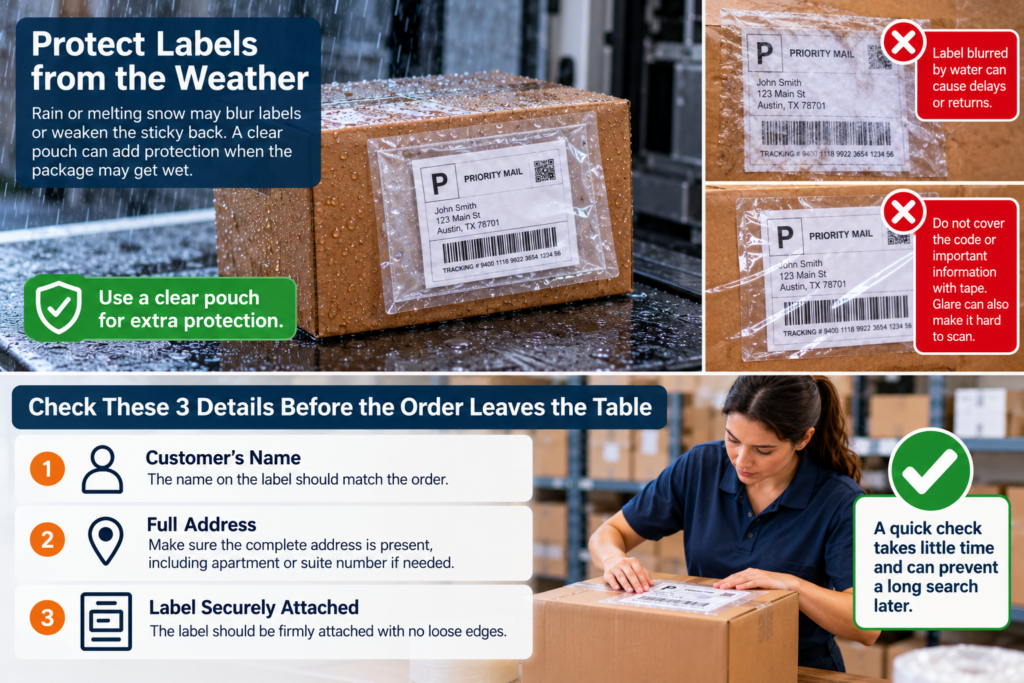
Weather can also cause trouble. Rain or melting snow may blur some labels or weaken the sticky back. A clear pouch can add protection when the package may get wet. If tape is used, make sure it does not create glare over the code or cover words that must be seen.
Train packers to check three details before an order leaves the table. The customer’s name should match the order. The full address should be present. The label should be firmly attached with no loose edges. This check takes little time and can prevent a long search later.
Keep label rolls in a dry place away from strong heat or cold. Poor storage can harm the sticky layer before the labels are used. Store printer ink, pouches, and extra rolls nearby so workers can replace an item without stopping the whole packing line.
Labels may be one of the smallest shipping supplies, but they guide every package. A clean surface, clear print, and final check help orders move through the carrier’s system. When the label works as it should, the package has a better chance of reaching the correct door on time.
