
When selling records, you’re often not just shipping the music. Buyers care about the condition of the record itself, but also the condition of the cover. A damaged seam or crease can lose a buyer interest in the record even though the music still sounds great. Before deciding on what to use for packaging and shipping supplies, determine whether the record is sealed (still has shrink-wrap), or whether it has been opened. Whether it is sealed, or not affects how you package the record.
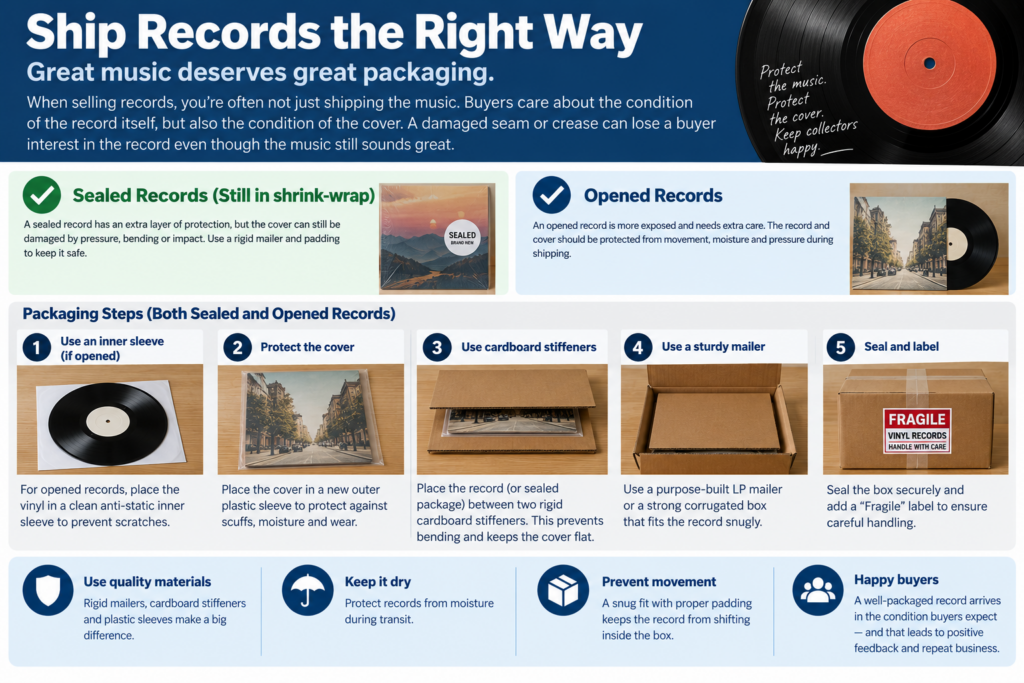
If an album is open, the disc can be packaged in the inner sleeve of the record alongside the record cover. The inner sleeve is typically a soft paper or plastic insert that holds the vinyl disc. The cover is usually made of thick cardboard. Packaging the record like this will help to protect it from getting damaged during shipment. For example, shoplifty suggests keeping the record and cover together in a protective record sleeve. Make sure both do not get squeezed too tightly by the other.
Sealed albums:
Before you start thinking about which shipping supplies to purchase, there is one important decision you need to make regarding a sealed album. Do not remove the seal on a sealed album simply because you think it would be easier to ship the disc separately from the cover. Ask the customer if they want you to leave it sealed, and document their response in case they have already specified it.
Protecting sealed discs:
When you decide to send a sealed disc, you’ll want to consider protection designed specifically for a packed album (i.e., a sealed disc). This type of protection will allow you to properly protect the disc, and prevent damage from occurring due to a small opening in the top of the album.
Prepare for packing:
Clear off a work area and gather everything needed for your order. Verify that you have all items included in the order such as the record, cover, and/or additional materials (e.g., posters, booklets, inserts).
Position any additional materials near the bare vinyl disc to avoid them touching it or being crushed by pressure. Once you’ve gathered all items, take clear photos of each item as well as the overall contents prior to placing them in protective packaging.
Choose a record mailer:
Select a record mailer large enough to accommodate both your album(s) and number of discs in your order. The manufacturer of your chosen mailer should provide guidance as to how many flat stiffeners to add. Ensure that your items rest evenly within the mailer prior to sealing. When closing your mailer, avoid applying excessive force to either side; this may bend your album cover or crush your vinyl record.
Edge inspection:
Prior to closing your mailer, inspect all edges for potential areas of compromise or weakness. Specifically review any corners that may protrude beyond their supports. Avoid positioning tape on either your record sleeve or printed artwork as you don’t want buyers having to peel adhesive residue off their covers once, they unpack their order. Follow instructions provided by the mailer manufacturer for securing your items, and after you’ve secured your items, verify that your total package weighs what you paid for and has proper postage applied. Do not rely solely on the weight of your record.
Postage label:
After purchasing postage and affixing the postage label to your package, ensure that the postage label matches your original sales order information. Share your tracking number with the buyer and let them know if their vinyl disc will be stored in its own sleeve outside of the album jacket. This can eliminate confusion once they unwrap their order.
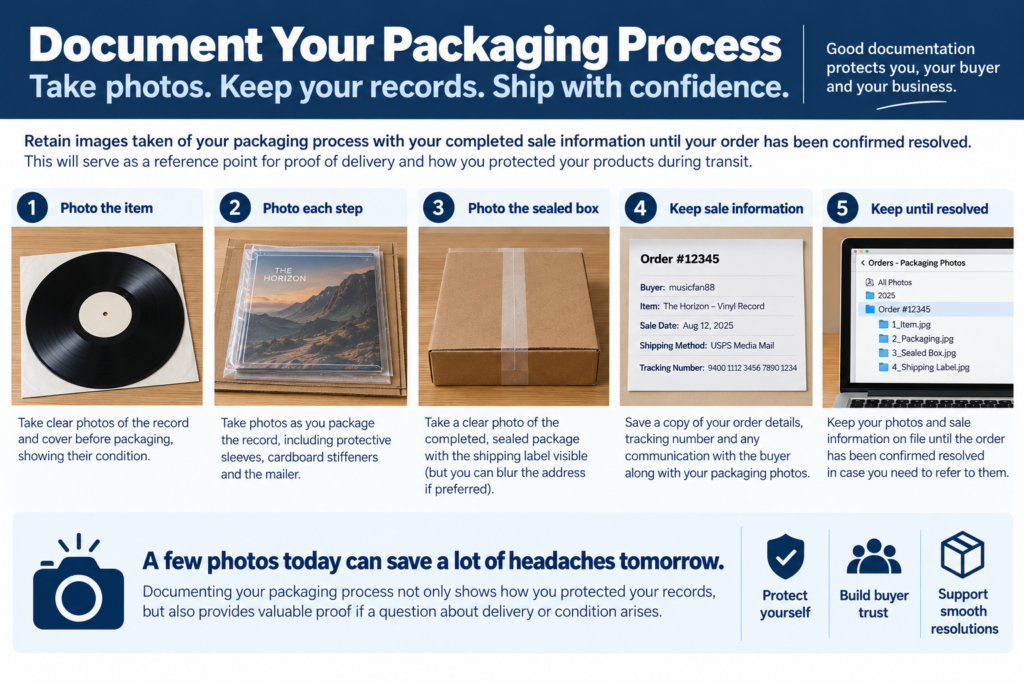
Save photos:
Retain images taken of your packaging process with your completed sale information until your order has been confirmed resolved. This will serve as a reference point for proof of delivery and how you protected your products during transit.
