
You may think you have nothing to worry about when you see a patch of grass. But if you plan on turning that area into a garden, your troubles begin as soon as you put the shovel in the ground. Not only do roots fight with the shovel, but also the dirt sticks to the sod, making this an increasingly difficult task. That’s not all, though. You have the option of starting a new bed using a simpler technique — and that primary tool may just be sitting behind your back door.
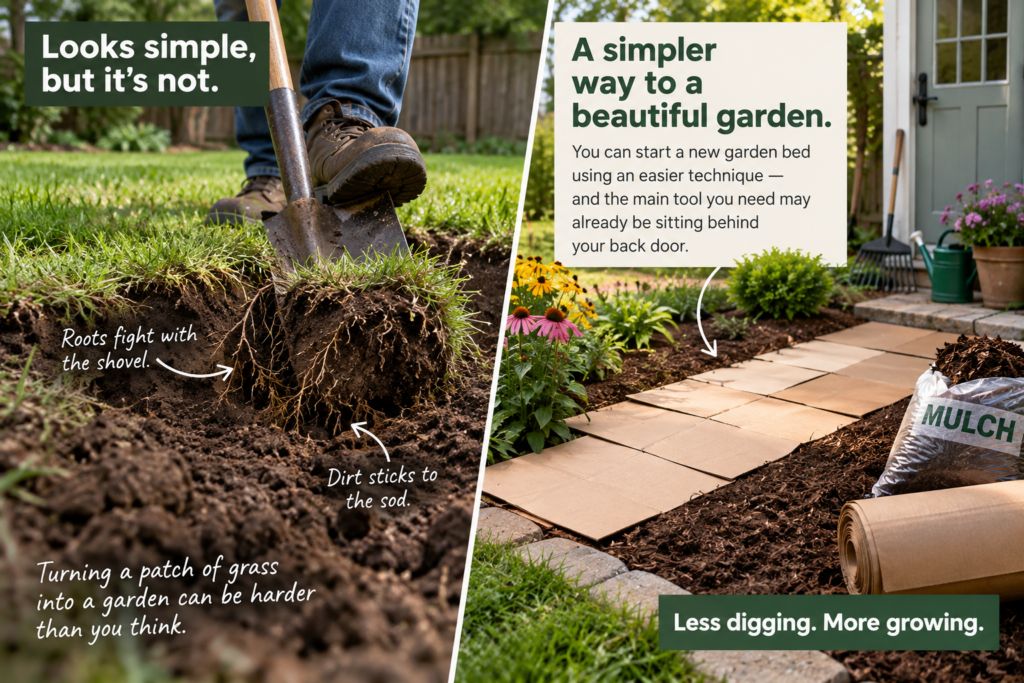
Cardboard boxes can be utilized to smother grass and most weed species. In addition, this process is referred to as “sheet mulching.” Once the cardboard covers the unwanted vegetation, it prevents them from receiving light. Eventually, the cardboard decomposes while at the same time providing beneficial insects such as worms to improve your soil quality.
To get started, choose cardboard with a non-coated surface (browns). Also remove packing tape, labels, staples and plastic. Make sure none of these items came into contact with oil or chemicals; these substances would likely kill nearby flower and/or food plant roots. A small amount of print is relatively minor compared to a cardboard with a waxy or glossy coating.
Determine the boundaries of your new bed by running a hose around the perimeter or drawing a border with string. Before laying the cardboard, use clippers to shorten tall grasses and thicker Weeds near the base. Leave all other debris on top of the ground; it will break down underneath the cardboard. However, dig up any stems or branches that may poke their way up through the cardboard.
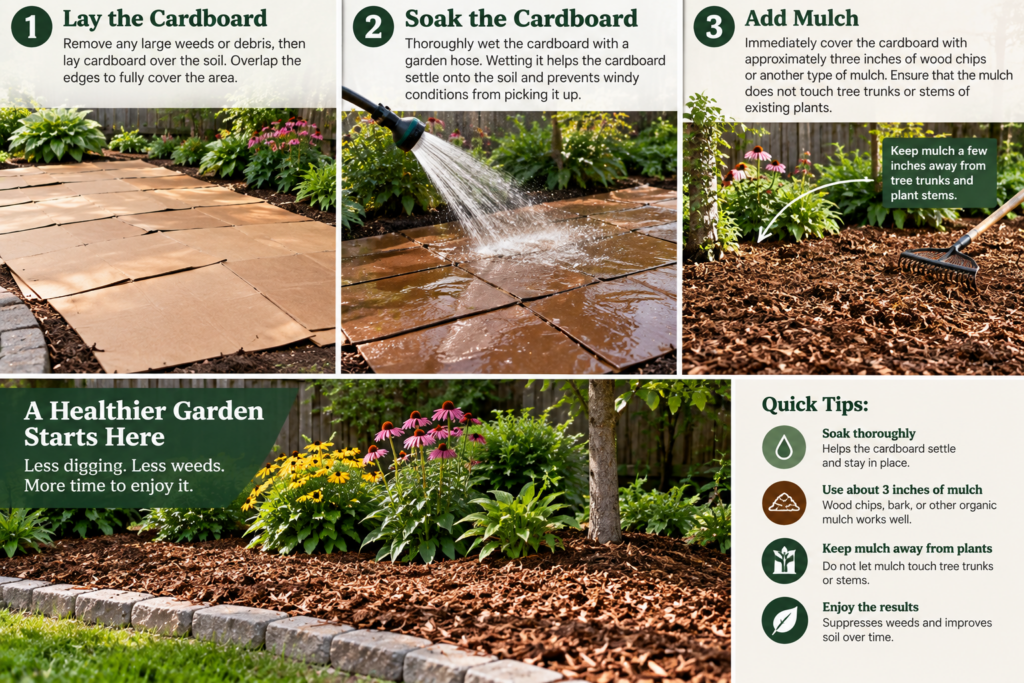
Open each box lengthwise so it lies flat. Lay One layer of cardboard across your designated gardening area. On top of that lay another piece overlapping One end of the first layer. Be certain that there are no openings for sunlight to hit the Weeds. For smaller areas, a single layer of cardboard may suffice. If you feel that more coverage is needed for large areas, a second layer may be applied. While a third layer may provide additional protection from Weeds and sun exposure, it could limit the ability of water and oxygen to reach underground.
Once the cardboard is laid out, thoroughly soak it. Wetting the cardboard will allow it to settle onto the soil and prevent windy conditions from picking it up. Immediately cover the cardboard with approximately three inches of wood chips or another type of mulch. Ensure that the mulch does not touch tree trunks or stems of existing plants.
It will take some time for the bed to develop. Many gardeners wait at least One year before adding plants. Other gardeners will drill small holes in the cardboard, allowing plants to grow sooner. Which approach to take will depend on how quickly Weeds germinate based upon weather and climate conditions in your area.
However, even using cardboard will not eliminate all of your garden problems. Nevertheless, it will make a very laborious job much easier for many individuals. There is far less sod to lift, far fewer Weeds to combat, and no need to spray herbicides throughout the entire area. Households discarded cardboard boxes can assist in developing a beautiful flowerbed, walkway, or vegetable bed. When combined with a little water and patience, a dull brown sheet becomes an active component of your garden!
