
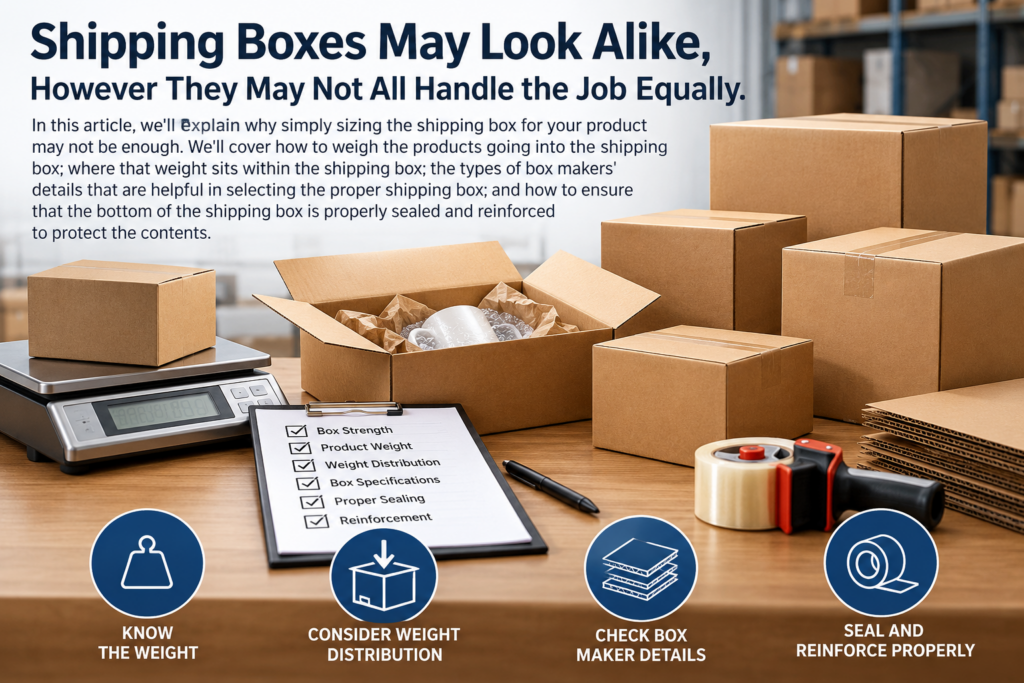
Shipping boxes may look alike, however they may not all handle the job equally. In this article, we’ll explain why simply sizing the shipping box for your product may not be enough. We’ll cover how to weigh the products going into the shipping box; where that weight sits within the shipping box; the types of box makers’ details that are helpful in selecting the proper shipping box; and how to ensure that the bottom of the shipping box is properly sealed and reinforced to protect the contents.
To begin, weigh every item (product, inner boxes, and cushioning) that will go into the shipping box. This way you know what the entire package weighs. When selecting shipping boxes do not consider only the weight of the product itself. Think also about how that weight is distributed throughout the shipping box. For example, a bundle of folded clothing distributes its weight over a larger area than a metal part with three “feet” which presses down on fewer areas. The greater localized pressure created by a concentrated point such as metal “feet” can create added stress to the bottom of the shipping box regardless of whether the overall weight is equal.
Once you’ve determined the weight and how that weight is situated in the shipping box, examine the information provided by the box manufacturer prior to ordering your shipping boxes. Manufacturers often provide additional detail regarding their shipping boxes including the type of wall used in their boxes (single wall, double wall), their recommended use of each shipping box (lightweight, heavyweight), and/or their suggested packaging methods. Suppliers should be able to assist you if any questions arise from reviewing these details. Remember that the largest shipping box is not necessarily the strongest shipping box nor is a shipping box’s thickness an indicator of how it will actually perform.
When selecting a single-wall corrugated shipping box, there are two layers that comprise the flutes; the liner board on either side of the flutes. Double-wall corrugated shipping boxes contain two layers of flute space. While double-walled corrugated shipping boxes may offer some benefits (e.g., providing support for heavier packages or requiring less internal packaging), ultimately, both choices depend on several factors including the manufacturer’s recommendations, product being shipped, etc.
In addition to selecting a shipping box that is rated for the heaviest item(s) in your shipment, also check to see that your selected shipping box provides a snug fit. Leave little or no empty space inside your shipping box. Empty spaces allow items to move around within the shipping box which can cause excessive stress on the shipping box. Excessive stress can lead to a damaged shipping box and subsequently, damaged product. To prevent this stress, utilize blocking material or fill material inside your shipping boxes to keep items stationary and to prevent sharp edges of product from piercing the shipping box.
After you’ve loaded your items into your selected shipping box, seal the bottom seam first and completely. There are various tapes available for sealing shipping boxes depending upon the weight of your shipments. Tapes specifically designed for lightweight shipping boxes will not adequately support heavier shipments. Likewise, using multiple strips of low-weight tape will not strengthen a poorly chosen shipping box. Always follow the instructions of the tape manufacturer and apply sufficient force to adhere to a dry surface.
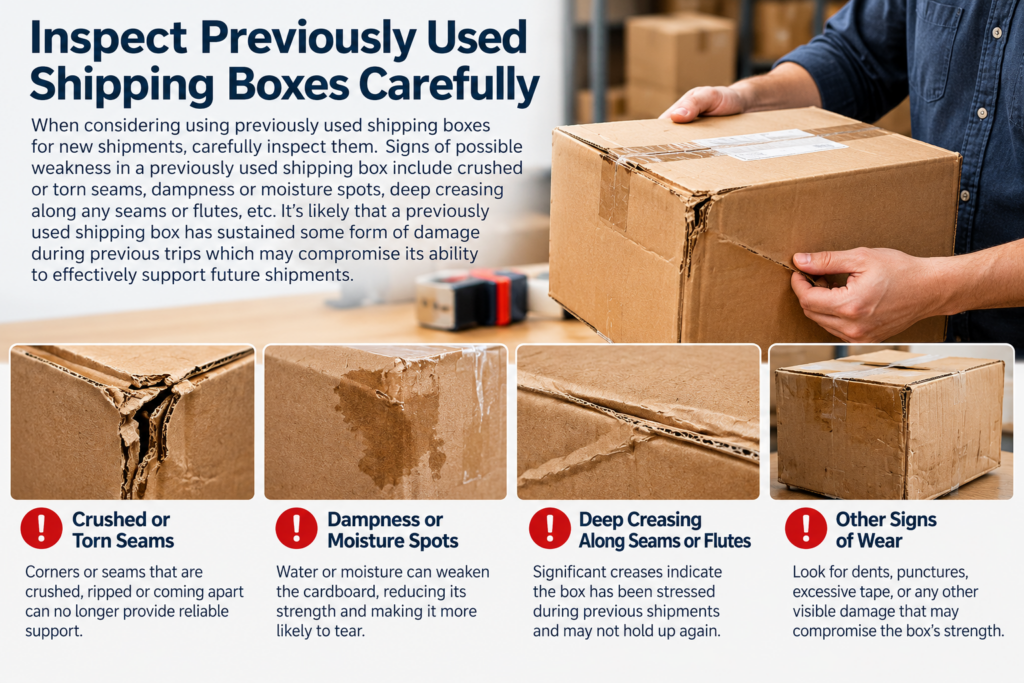
When considering using previously used shipping boxes for new shipments, carefully inspect them. Signs of possible weakness in a previously used shipping box include crushed or torn seams, dampness or moisture spots, deep creasing along any seams or flutes, etc. It’s likely that a previously used shipping box has sustained some form of damage during previous trips which may compromise its ability to effectively support future shipments.
Finally, take advantage of testing your selected shipping box before filling many orders with that same configuration. Prepare a test unit with weights equivalent to those of your actual shipments. Test units should demonstrate no sagging bottom seam(s), bulged sides due to excess air pockets between product and/or outer seams, shifting product when moving the test unit, etc.
Additionally, maintain records of successful configurations (box and packing method). Matching the strength level of your selected shipping box to your shipment will help your team consistently select the best shipping box for every shipment.
