
Just because a box has been wrapped with nice wrapping paper doesn’t mean it is safe to put a piece of bare candy in there. The paper, ink, glue, and/or coatings could come into contact with your candy if there isn’t some sort of wrapper separating them. Before you fill the carton, ask yourself one simple question: was this package designed to be in direct contact with food?
To start, find out where your candies will be sitting within the box. Since each of these types of candies already has a wrapper surrounding them (i.e., cellophane, foil), they would never actually touch the bottom of the box. On the other hand, loose chocolate, fudge, taffy, etc. Would all directly touch the cardboard of the box. It would be foolish to consider a box that is just being bought for giving to someone as “food grade” packaging. In fact, most manufacturers that sell boxes specifically for crafting purposes warn that the product cannot be used for anything involving actual food.
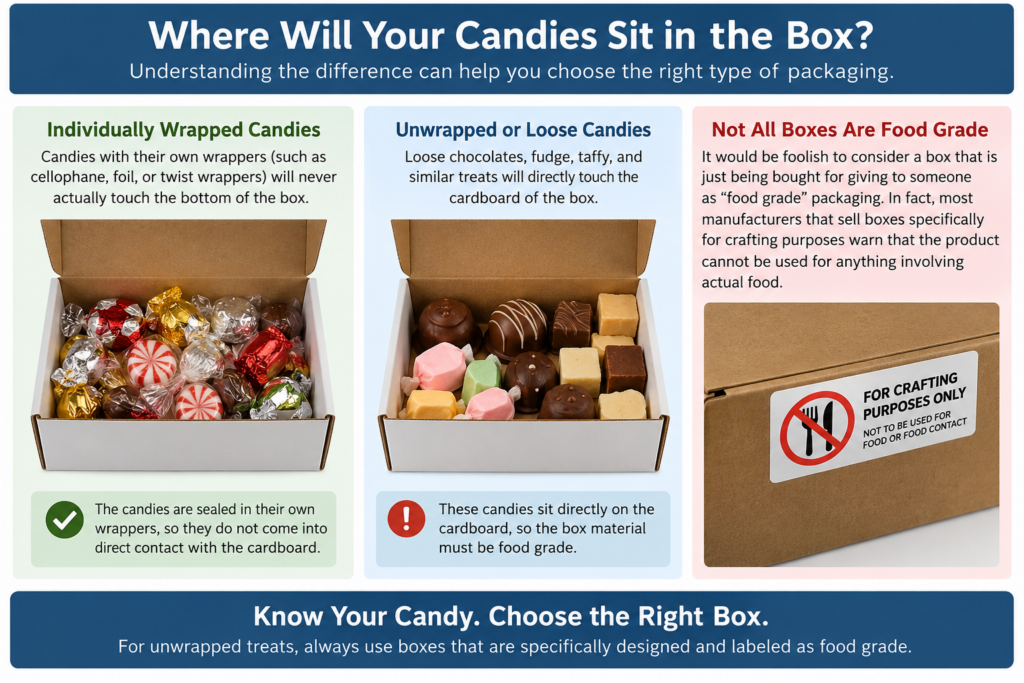
Look at the product description for the words “food safe,” “has been approved for food contact,” or “designed for direct food contact.” If none of those words appear in the product description, go back to the manufacturer or merchant and ask them for written documentation about the safety of using their products to store food items. Next, find out which materials on the inside of the carton are food-safe; i.e., does the inside paper, coating, ink and glue meet your requirements based upon the type of candy you are selling. Why is this important? Because different types of candies are different textures. Candy can be dry, oily, sticky or wet. A particular material may be good enough for one type of candy but not suitable for others.
You can also add a food-grade lining to many candy boxes to provide a clean layer between the box’s paper and the candy. Examples include glassine sheets, candy cups, trays or other similar approved linings. However, simply assuming that any old paper from a kitchen drawer is safe is incorrect. Printed tissue, craft paper, newspaper and gift wrap are all examples of non-food packaging papers and contain dyes/coatings which may rub off onto your candies.
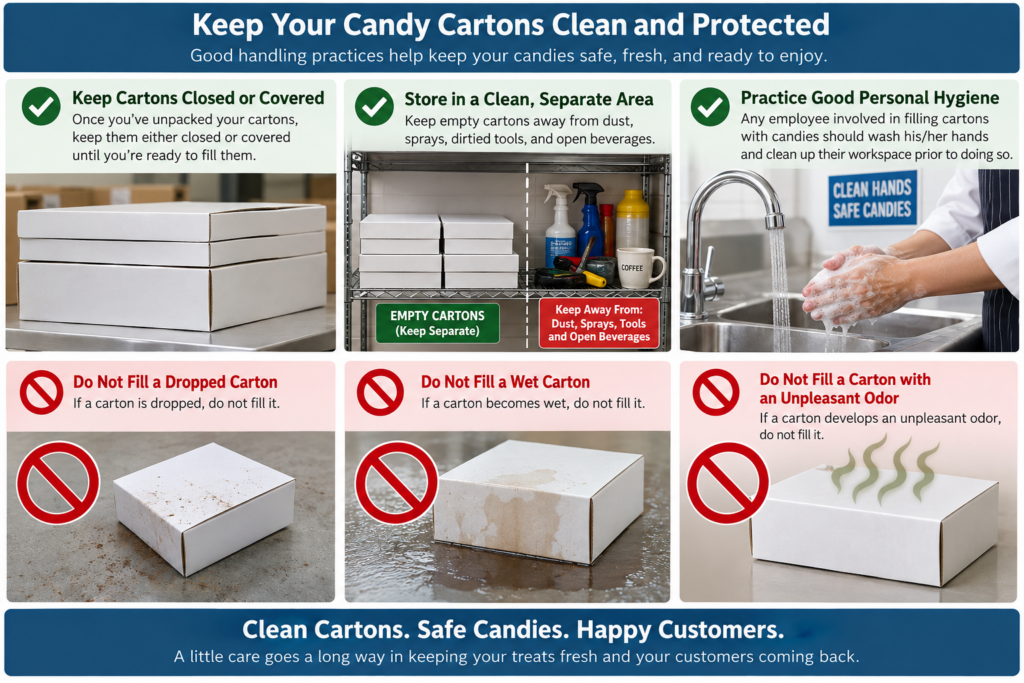
Keep your empty cartons either closed or covered once you’ve unpacked them until you’re ready to fill them. Store them separately from dust, sprays, dirtied tools, and open beverages. Any employee involved in filling cartons with candies should wash his/her hands and clean up their workspace prior to doing so. When a carton is dropped, becomes wet or develops an unpleasant odor, don’t fill it!
As far as allergens go, take precautions when changing batches as well. A box/insert that had previously stored nut candies should not be reused to store a nut-free batch. Even when the outside appears clean, small crumb fragments and oils can remain behind. Therefore, use separate containers for each item whenever possible and label them accordingly. Then follow local health department regulations regarding your business.
Lastly grease stains on the paperboard are another indication that perhaps you chose the wrong packaging. Rich chocolates and oils from other products may stain the paperboard causing unwanted stains. Consider adding a food-safe liner designed for oily foods to prevent oil absorption into the packaging. Contact your supplier to see what they recommend to avoid making assumptions about what type of liner you might need based solely upon the color/thickness of the container.
The first step in having good food packaging is before you close the lid. Take care when selecting your packaging by considering its intended use and adding a food-grade liner if necessary to ensure cleanliness for all people consuming your candies.
