
You can have a candy box that appears perfectly clean yet the box isn’t suitable for bare food (the most difficult issue). Most candy boxes will appear colorful; have a nice-looking paper on top; or will be transparent with windows. Color, paper or windows do NOT tell you whether the candy will come into contact with something safe.
Before you pack a single truffle or mint, identify where you want to put anything between your treat and the box.
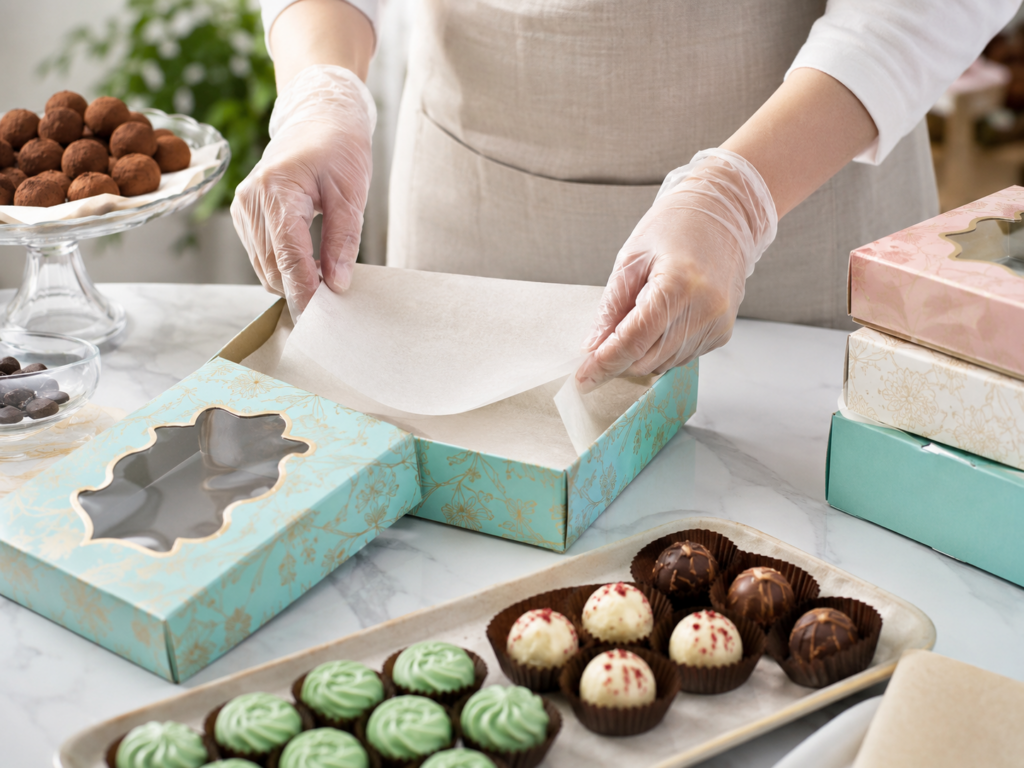
Begin by simply asking yourself this question: Are all candies pre-wrapped? Most times wrapped candies are covered with their own food-safe material. Thus, the candy box protects the candies by keeping them from being damaged by moving around. However loose fudge, chocolate or other unprotected candies require extra caution. In these cases, they may need a protective cup (made of food-grade materials), candy pads or other type of liner specifically created for the protection of food products.
Don’t choose a liner based upon appearance. While plain white tissue paper may appear clean and attractive, many types of decorative papers were never intended to protect food. Similarly ink, adhesives and some packaging materials could possibly impact your decision. When food-contacting materials touch the edible product, the FDA classifies those materials as Food Contact Items. Therefore, ask your vendor if the box, cup, pad, etc., was designed for the manner in which you intend to use it.
In addition, consider the type of candy. For example, melted chocolate can cause oil spots; caramel can create sticking issues; and brittle hard candies can break into pieces due to knocking against other pieces of candy. A small amount of paper cup will protect soft candies from adhering to the sides of a container. Pads will provide an additional thin layer above or below the products. Dividers can prevent flavors and forms from getting mixed up during transport.
Additionally, climate plays a role in protecting your candies. A box will not prevent chocolate from melting while in a hot vehicle. Neither will it retain freshness for weeks after purchase. Many candies require an inner wrapper prior to placing them within a paper box. Sometimes an inner wrapper provides an air-tight seal or prevents moisture from entering the package. The exterior box provides support to give the candy an appealing presentation along with a clean method for transporting the product.
Finally, allergy prevention requires planning and organization. Peanut candies stored separately than non-peanut candies using separate tools and area’s during preparation. Cups and liners should be kept apart until packaging. Each completed box should be labeled clearly so both employees and consumers know what they contain. Maintaining cleanliness and organization of the products decreases the likelihood of cross-contamination.
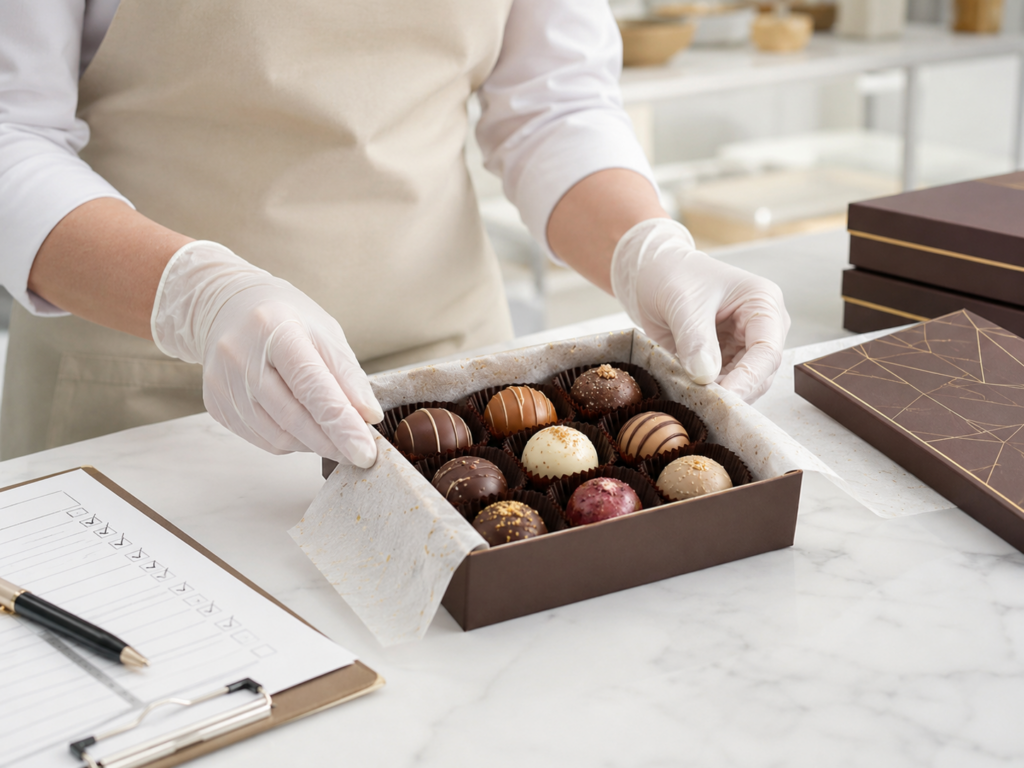
Lastly perform a final quality control inspection on a fully packaged box. Allow the box to sit for the length of time as a true shipment. Pick up the box, flip it upside down and open it once more. Check for any damage such as stains, broken/ stuck candies, bent cups or intermixed products. Repeat this quality control process in warmer temperatures if your primary business model is seasonal (summer sales).
This quality control test demonstrates that both your candy containers and linings work properly together to achieve a common goal: each candy reaches the consumer in perfect condition with no contamination or mess.
