
You can have a solid box sitting on your table, sized right and ready to go, and still run into problems once it ships. That’s the part that confuses people. They think the box is doing all the work, when in reality, what happens inside matters just as much.
That’s where shipping supplies come in, and most people don’t think about them until something breaks.
Picture placing an item into a box with nothing else around it. It fits, but there’s space on the sides. You close the flaps, tape it, and send it out. Everything looks fine at that moment. But once it’s moving, that item starts to shift. Every turn, every stop, every small drop turns into a bump inside the box.
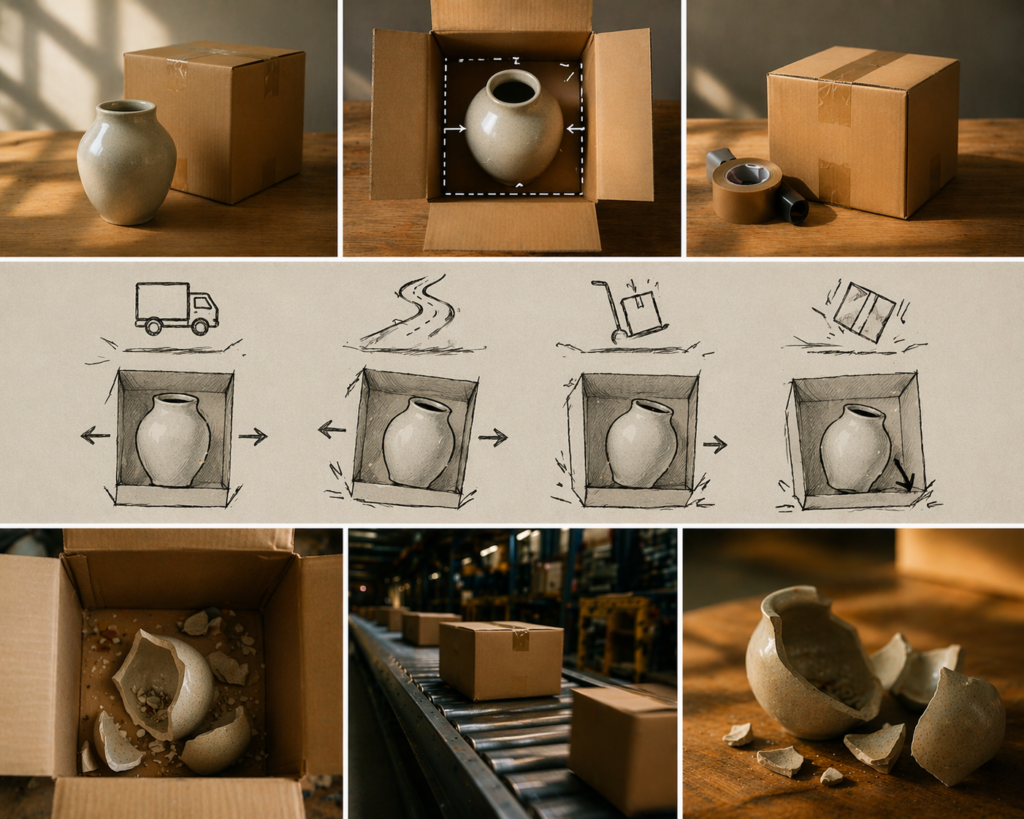
Those bumps add up.
By the time it arrives, the product has taken hit after hit. Sometimes you can see the damage. Sometimes you can’t, but the quality still took a hit.
That’s the gap most people don’t realize they have.
Shipping supplies are what fill that gap.
They’re what keep the item from moving, from sliding, from taking those repeated impacts during the trip. When used the right way, they turn the inside of the box into a stable space where everything stays put.
The key is not just using them, but using them with purpose.
Start by thinking about movement. If you place your item in the box and give it a light shake, does it shift? If it does, it needs support. The goal is to create a snug environment where the item feels held in place, not loose.
That doesn’t mean overpacking it with material.

It means placing the right amount in the right spots so the item can’t build momentum inside the box. When there’s no room to move, there’s no chance for repeated impact.
Next is protection from pressure.
Boxes don’t just deal with movement. They deal with weight from the outside. When other boxes are stacked on top, that pressure pushes inward. Good shipping supplies help absorb that force so it doesn’t transfer directly to the item inside.
It’s like adding a buffer between your product and everything happening around it.
Another piece people overlook is consistency.
When you pack the same way every time, using reliable materials, your results become predictable. You’re not wondering if this shipment will make it while the last one didn’t. You’re building a process that works again and again.
That saves more than just time.
It reduces the number of issues you have to deal with after the fact. Fewer damaged items, fewer replacements, fewer back-and-forth emails trying to fix something that could have been prevented.
There’s also a balance to it.
Using too much material can be just as inefficient as using too little. The goal is to protect without wasting. When you find that balance, you’re not only improving how your packages arrive, you’re also keeping things streamlined and responsible.
Over time, this becomes second nature.
You stop thinking of shipping supplies as extras and start seeing them as part of the system that keeps everything working.
Because in the end, the box holds the shape.
But the supplies inside are what make sure everything arrives the way you intended.
