
The primary function of packaging supplies is to provide the product’s journey to the consumer unscathed (i.e. in the exact condition as it was received by the shipper). This seems like a straightforward goal, however many companies find out the hard way that a couple of minor errors in packing will produce significant consequences.
Why are there packages that show up to the consumer in disarray while others are perfectly intact? Not luck typically causes damaged shipments; in most situations, it is the selection of appropriate packaging supplies prior to shipment from the warehouse.
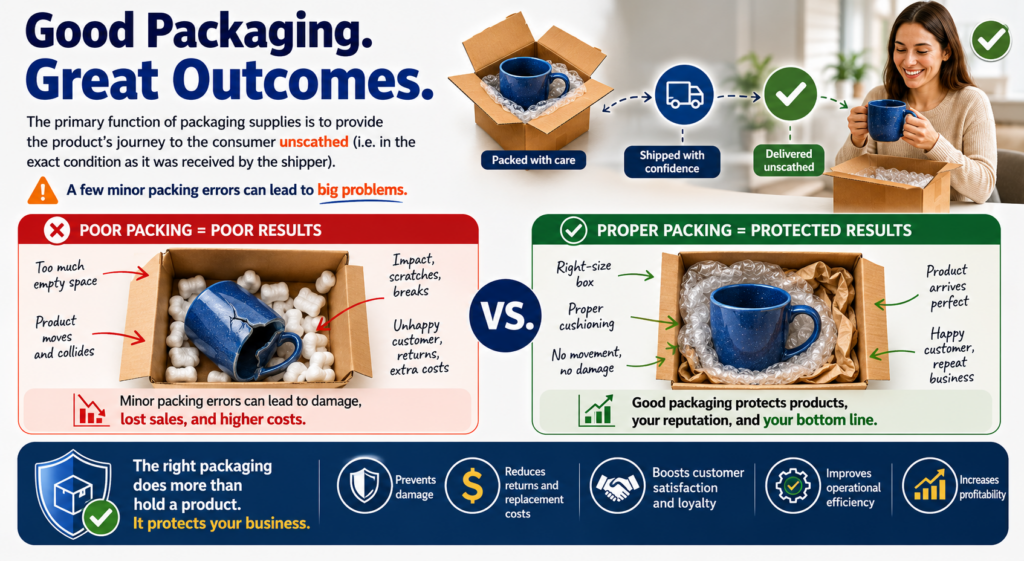
For example, you have a customer who ordered a coffee mug. However, instead of placing the coffee mug into a box with sufficient cushioning so it does not slide or bounce around, you place it into a box with “dead” space. Therefore, each time the package bounces along the route to your customer the coffee mug has opportunity to break prior to delivery.
Using the correct cushioning material in the box will absorb shock and help protect against movement of the product. Does using heavier duty packaging supplies always mean increased cost? No.
More than likely, you will spend more money repairing damaged goods rather than purchasing new ones. You pay for a replacement product plus additional postage and labor to repair/replace the damaged product. Typically, providing adequate packaging supplies from day one provides greater savings than having to replace and re-ship damaged goods later.
A well-packed package creates a positive customer experience. Consider how you feel when you open a damaged package (crushed, ripped, etc.). Although the product may still be functional, a negative perception of your company could exist in relation to detail-oriented issues. Alternatively, a neat and tidy package promotes confidence with your customers regarding your level of care before they see their purchased product.
How can I determine what type(s) of packaging supplies I should use?
Firstly consider what type of product you are selling. Fragile? Heavy? Long distance travel?
Depending upon these factors, you will want to select packaging supplies that meet or exceed the needs of the product. For example, a lightweight t-shirt may require no more than a mailing envelope; whereas, glassware would require cushioning, robust shipping container, and heavy-duty tape.
In addition to providing protective barriers for products enroute to consumers, packaging supplies assist with storage. Once a product has been shipped, it sits in inventory until it ships again. Proper packaging materials help maintain cleanliness and orderliness of stored products in preparation for shipping.
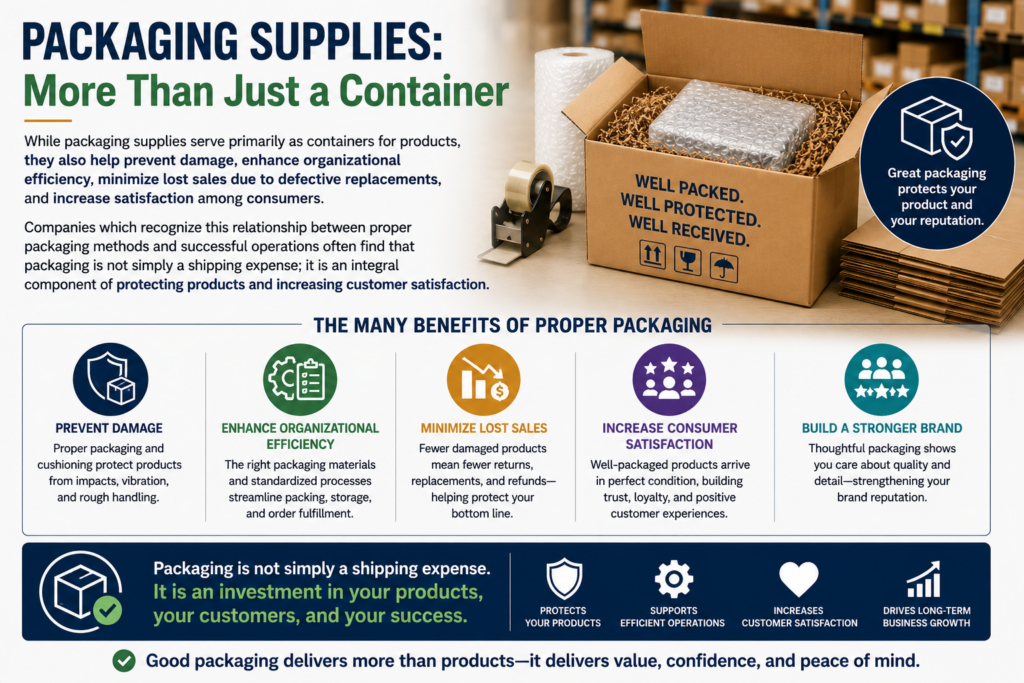
While packaging supplies serve primarily as containers for products, they also help prevent damage, enhance organizational efficiency, minimize lost sales due to defective replacements, and increase satisfaction among consumers. Companies which recognize this relationship between proper packaging methods and successful operations often find that packaging is not simply a shipping expense; it is an integral component of protecting products and increasing customer satisfaction.
