
Most people think shipping costs are all about postage.
They compare carrier rates, look for discounts, and try to save a few dollars on each shipment. While those things matter, there is another cost that often gets ignored. It happens when packages are not prepared correctly before they ever leave the building.
A common question people ask is, “What counts as shipping supplies?” The answer includes all the materials used to prepare an item for travel. Boxes, tape, labels, cushioning materials, mailers, and packing paper all fall into this category. They work together to help products reach their destination safely.
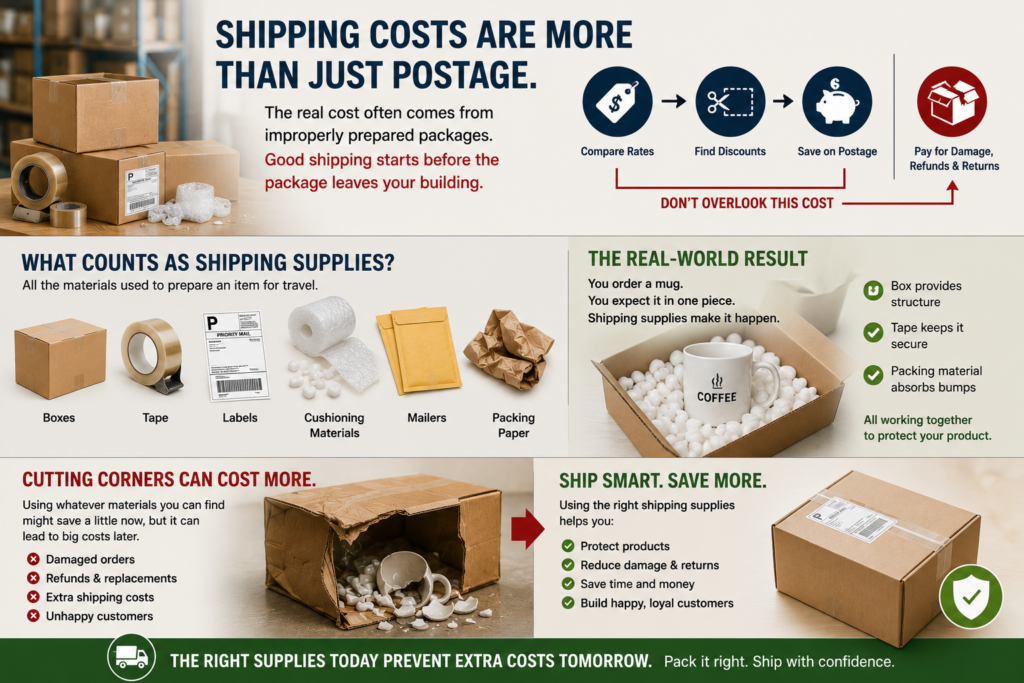
Imagine ordering a coffee mug online. When the package arrives, you expect the mug to be in one piece. You do not think much about the materials used to get it there. Yet every piece of that package played a role. The box provided structure. The tape kept it closed. The packing material helped absorb bumps along the journey.
Without those supplies, the chances of damage would be much higher.
Many small businesses discover this after their first few shipments. At first, they may use whatever materials they can find. Old boxes, leftover tape, and random filler materials seem like a good way to save money. Then a damaged order leads to a refund, a replacement shipment, and an unhappy customer.
Another question people often ask is whether better shipping supplies can improve efficiency. The answer is yes. When supplies are organized and easy to access, packing orders becomes faster. Employees spend less time searching for materials and more time completing shipments.
This benefit is not limited to businesses. Families moving across town also rely on shipping supplies. Parents sending care packages to college students use many of the same materials. Even hobby sellers who ship items occasionally can benefit from having the right supplies available.
Labels are one shipping supply that people sometimes underestimate. A clear label helps packages move through shipping systems more smoothly. It reduces confusion and helps ensure deliveries reach the correct destination. A missing or damaged label can create delays that nobody wants.
Another frequently asked question is how much protection a package really needs. The answer depends on the item being shipped. Books need different protection than glassware. Clothing requires different packaging than electronics. Looking at the product first usually helps determine the best materials to use.
Shipping supplies can also support charitable efforts. Community groups often ship donated items to families, schools, and disaster relief programs. Reliable packing materials help ensure those donations arrive in good condition and can be used right away.
One surprising benefit of good shipping supplies is confidence. When a package is packed properly, there is less worry about what might happen during transit. The sender feels better about the shipment, and the recipient is more likely to receive the item as expected.
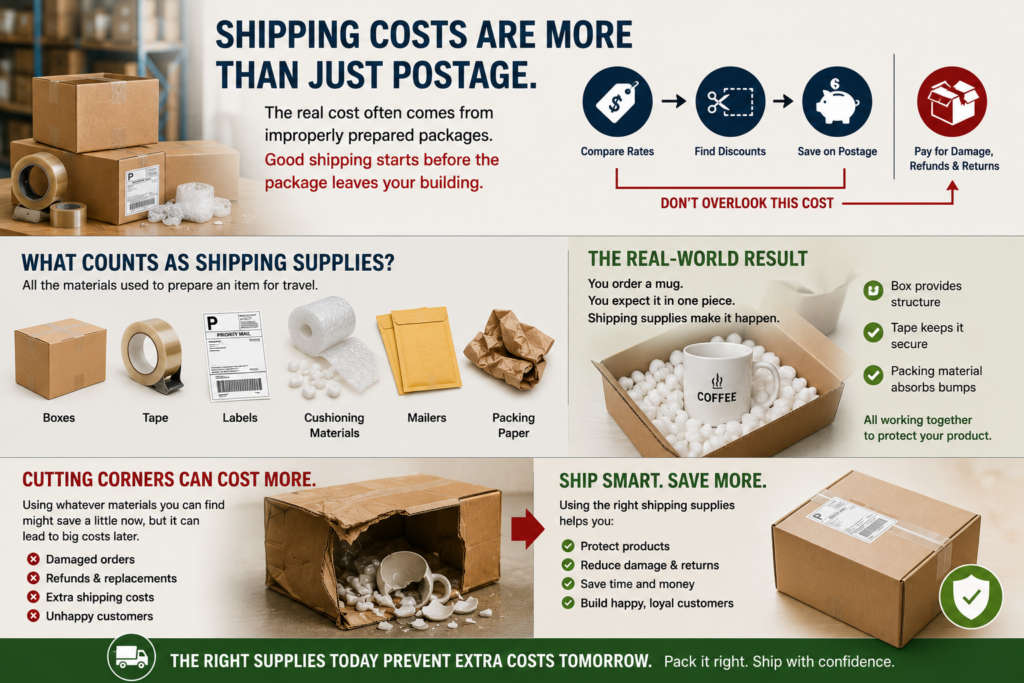
People often focus on what happens after a package leaves. Tracking numbers, delivery updates, and arrival dates get most of the attention. Yet many successful shipments are decided before the box is even sealed.
The right shipping supplies help protect products, improve organization, and reduce avoidable problems. Whether someone ships one package a month or hundreds every week, having dependable materials available can make the entire process run more smoothly.
Good shipping starts long before the truck arrives. It starts with the supplies that help every package begin its journey the right way.
